



 Peer Aquatic Biology

Info
That’s what you call sheer luck: on June 11, 2018, just a few steps from the Hawai‘i Institute of Marine Biology (HIMB), Jan Vicente discovered a previously unknown marine sponge at a depth of just 3 meters!
.
Stryphnus huna is characterized by its encrusting growth form, the composition of its spicules (Oxeas in two sizes, Sanidasters, and Oxyasters), and the dimensions of the spicules.
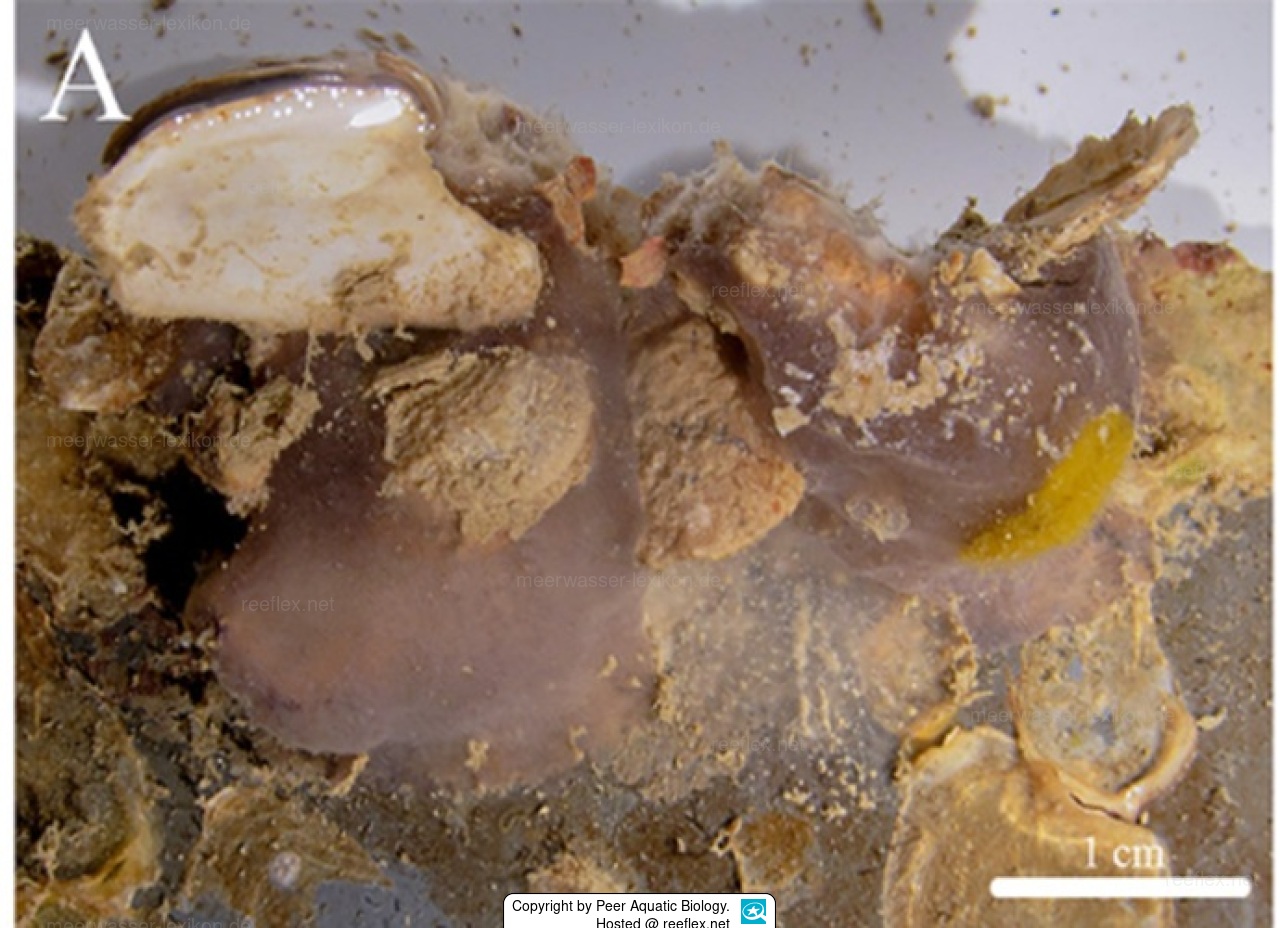
The sea sponge is a thin (2 mm thick), encrusting sponge that spreads laterally (4 × 2 cm), and no oscula were visible.
The surface is somewhat rubbery to viscous; the consistency is tough and difficult to tear.
The color of the living sponge is a light grayish-brown.
Habitat and Ecology:
The specimens were collected by ARMS on the Hawaiian island of Moku o Loe (also known as Coconut Island) in a shallow reef following a two-year recruitment phase.
This species appears to be strictly sciophilic and has not yet been found on natural calcareous surfaces.
Distribution: Moku o Lo’e, Kāne’ohe Bay, O’ahu, Hawai’i, at a depth of 3 meters.
Etymology: “hūnā” is a Hawaiian word meaning “to hide.” This word was chosen because of the cryptic nature and rarity of this species.
Reference:
Nunley RM, Rutkowski EC, Toonen RJ, Vicente J. 2025. Potential transoceanic dispersal of Geodia cf. papyracea and six new tetractinellid sponge species descriptions within the Hawaiian reef cryptofauna. PeerJ 13:e18903 https://d
.
Stryphnus huna is characterized by its encrusting growth form, the composition of its spicules (Oxeas in two sizes, Sanidasters, and Oxyasters), and the dimensions of the spicules.
The sea sponge is a thin (2 mm thick), encrusting sponge that spreads laterally (4 × 2 cm), and no oscula were visible.
The surface is somewhat rubbery to viscous; the consistency is tough and difficult to tear.
The color of the living sponge is a light grayish-brown.
Habitat and Ecology:
The specimens were collected by ARMS on the Hawaiian island of Moku o Loe (also known as Coconut Island) in a shallow reef following a two-year recruitment phase.
This species appears to be strictly sciophilic and has not yet been found on natural calcareous surfaces.
Distribution: Moku o Lo’e, Kāne’ohe Bay, O’ahu, Hawai’i, at a depth of 3 meters.
Etymology: “hūnā” is a Hawaiian word meaning “to hide.” This word was chosen because of the cryptic nature and rarity of this species.
Reference:
Nunley RM, Rutkowski EC, Toonen RJ, Vicente J. 2025. Potential transoceanic dispersal of Geodia cf. papyracea and six new tetractinellid sponge species descriptions within the Hawaiian reef cryptofauna. PeerJ 13:e18903 https://d

